

|
Hakuin the artist
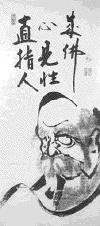 |
Hakuin was also was an artist of note, producing some of the most powerful Zen-style paintings of any Japanese. Like his writings, these works are vigorous, impulsive, and dynamic.
Hakuin began painting late in life, beginning in his sixties and continuing until his death at eighty-four. As he grew older, he increasingly relied on it as a means of communicating Zen ideals. By the end of his life, he had produced well over one thousand paintings and calligraphies in a remarkable range of styles and subjects, often suffused with humor.
In his calligraphy and paintings Hakuin introduced many new subjects into Zen art. Some of these themes came from his Zen teachings, others from observation of the world around him, and still others from folklore, often invested with his own very wry humor.
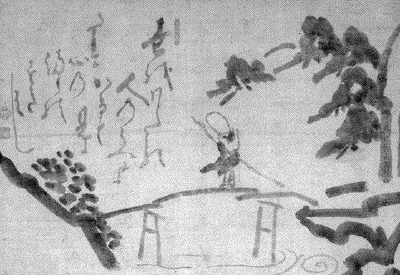 |
Bridge at Mama |
Hakuin used humor in his paintings and inscriptions. Some contain startling images, animal-human transformations, deliberate paradoxes, and parody. The result of his turning to brushwork to express his Zen vision was an avalanche of painting and calligraphy that spread his wit or genial wisdom throughout Japan.
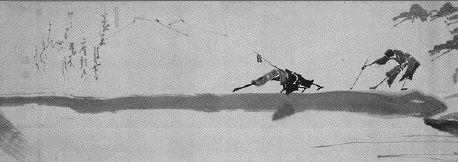 |
Blind
men crossing a log bridge |
For example, Hakuin for one painting Hakuin chose an aging courtesan to represent the virtues of a bodhisattva. On another he added this inscription:
As for Otafuku, although her nose is flat
And her eyelids are puffy, she is a kind woman.
No matter what we call her,
She has been taking good care of men -
Otafuku suddenly appears to guide you;
Otafuku will preach the Buddhist truths.
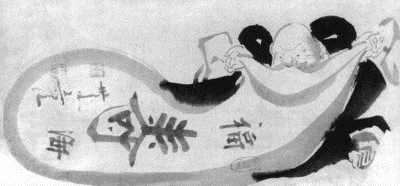 |
Hotei
with his Treasure Bag |
Just as a teacher, as an artist Hakuin was a trendsetter It was
profoundly influential. More than one thousand of Hakuin's works
survive.and was been an inspiration for many later Zen artists,
including Sengai and the Zen poet Ryokan (Lesson 33).
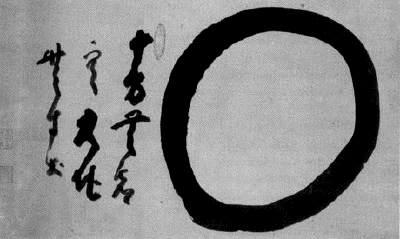 |
Enso |
 |
 |
See Kaz Tanahashi's Penetrating Laughter: Hakuin's Zen and Art for a wonderful presentation of Hakuin's art, writing and teaching >>>